
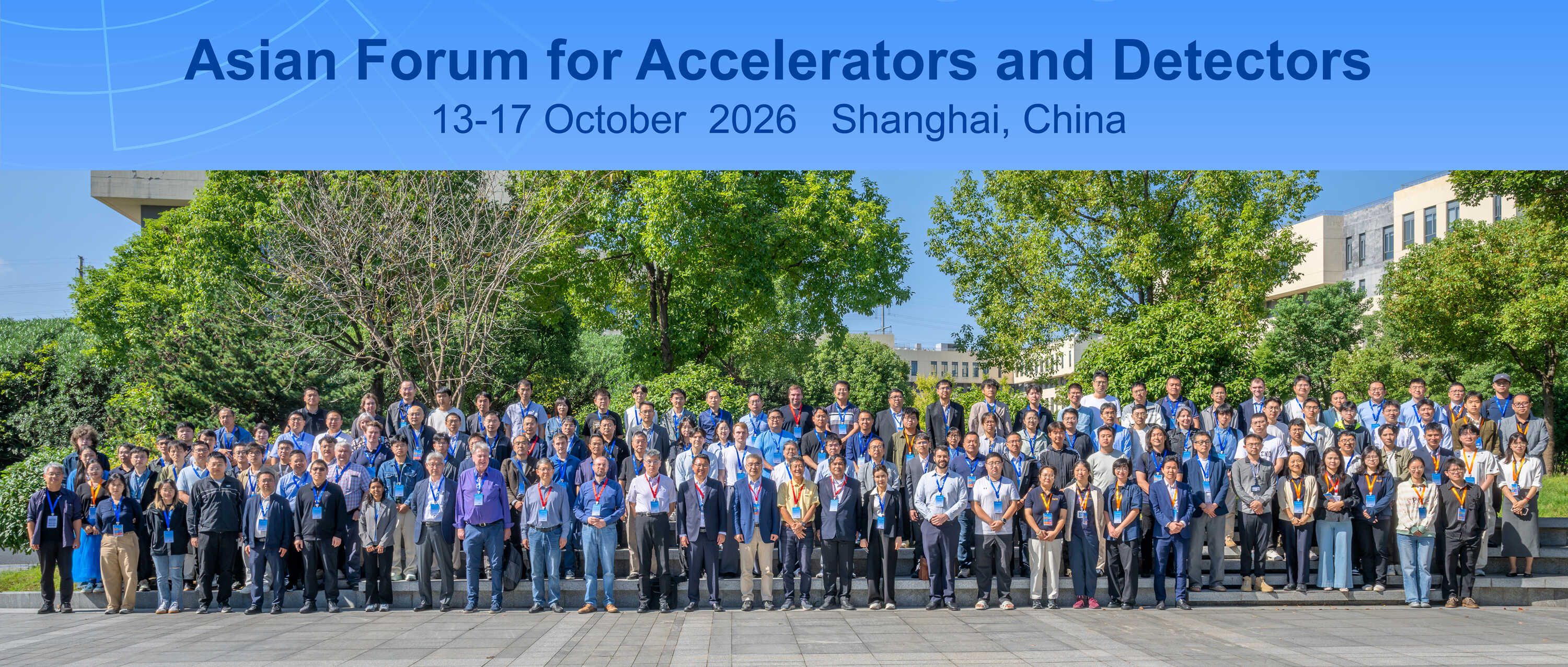
The 2026 Asian Forum for Accelerators and Detectors (AFAD 2026), hosted by the Shanghai Advanced Research Institute (SARI) of the Chinese Academy of Sciences, with support from the Asian Committee for Future Accelerators (ACFA), took place in Shanghai from October 13–17, 2026.
The forum brought together around 200 researchers from 10 countries and featured 13 plenary and 68 parallel-session presentations. The scientific program covered seven working groups: Accelerator and its related technologies for photon science (WG1); Detector technology development (WG2); Accelerator technologies for industrial & medical applications (WG3); Innovative accelerator techniques (WG4); Accelerator and its related technologies for hadron (neutron) science (WG5); Network & computing (WG6); and Cryogenics, cryomodule and superconducting technology for accelerators (WG7).
Haixiao Deng, President of SARI and Chair of the Organizing Committee, delivered the opening address. He highlighted the importance of international collaboration and outlined SARI's work in accelerator physics and photon science, as well as its efforts to develop and operate major research facilities.

Plenary presentations were delivered by Shoji Asai, Director General of the High Energy Accelerator Research Organization (KEK) in Japan; Saroj Rujirawat, Director of the Synchrotron Light Research Institute (SLRI) in Thailand; Zhentang Zhao, Director of the Shanghai Synchrotron Radiation Facility (SSRF); and distinguished experts from various research institutions. The presentations covered the construction, commissioning, operation and upgrading of major accelerator facilities in Asia, as well as research activities and international cooperation at related institutions. Speakers also discussed strategies for the sustainable operation and future development of accelerator-based light sources, and explored potential applications of artificial intelligence (AI) in research, particularly in scientific data management.
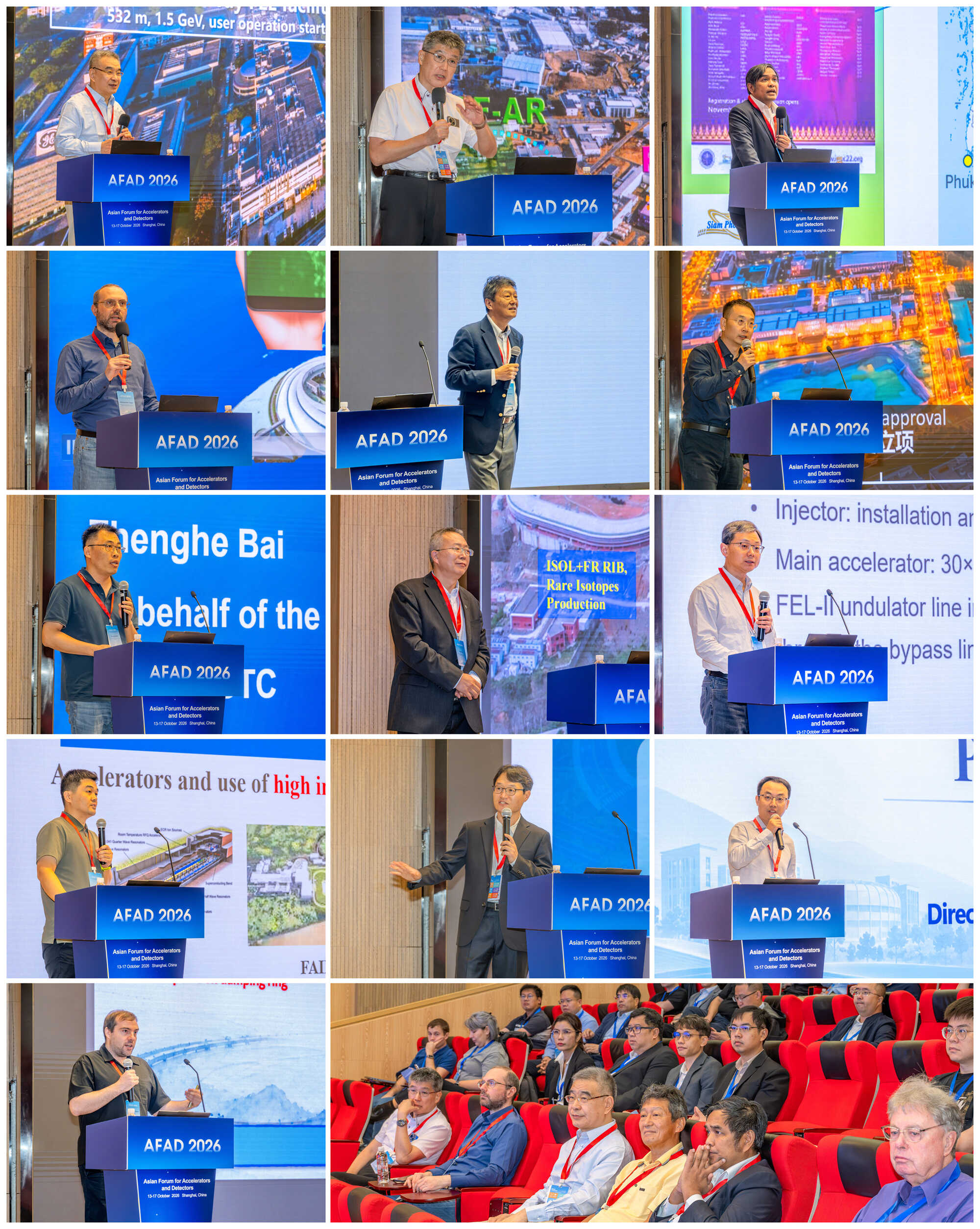
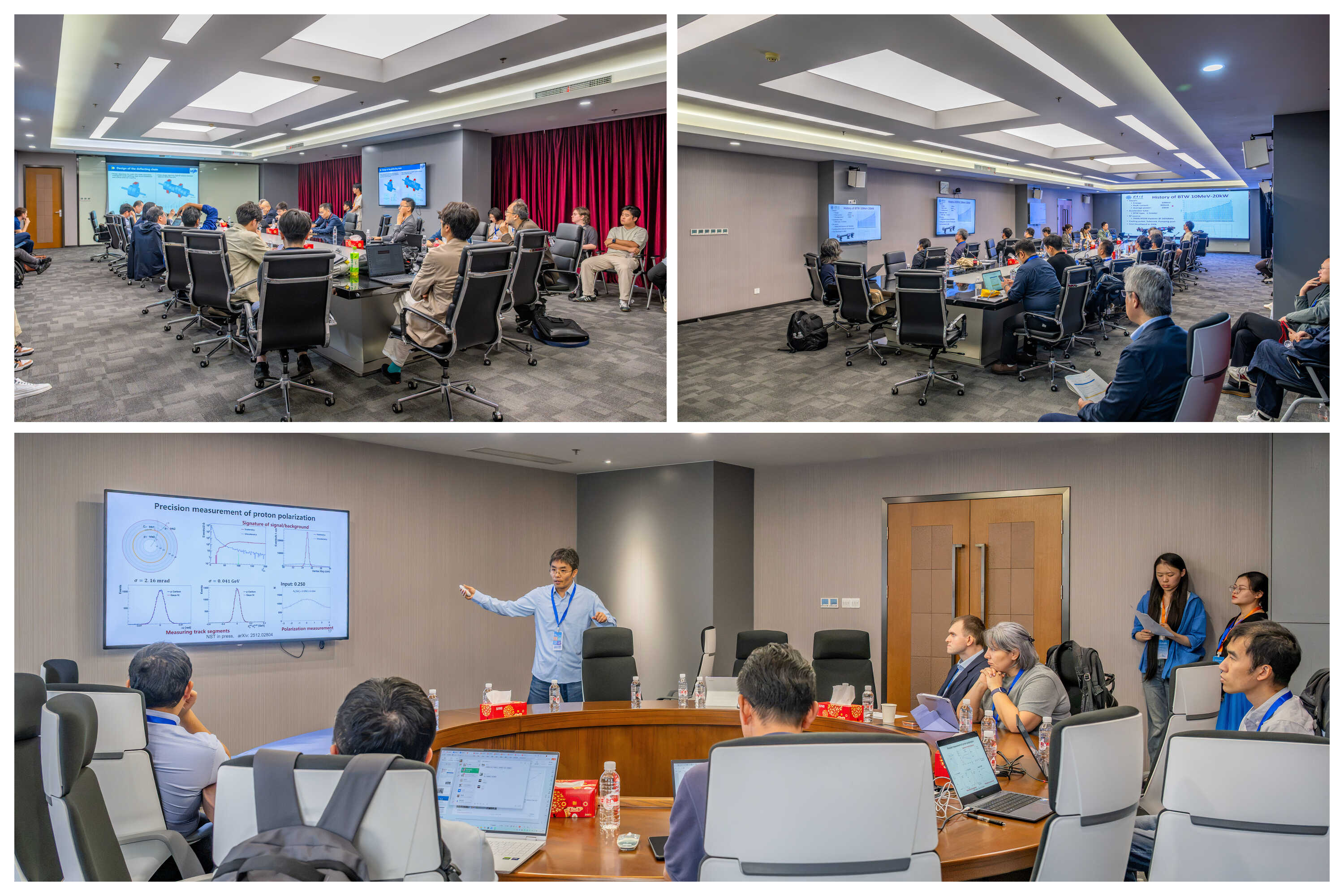
Parallel sessions covered laser and plasma acceleration, high-performance X-ray and neutron detectors, superconducting cavities and cryogenic systems, particle therapy, and medical isotope production. Participants discussed advances in AI-assisted beam simulation and optimization, data acquisition and processing at major scientific facilities, and scientific computing infrastructure, as well as the application of new technologies to facility construction, operation and user experiments. They also visited SSRF and the Shanghai Soft X-ray Free-Electron Laser Facility for technical exchanges on facility development and operation.
AFAD 2026 provided a platform for the accelerator and detector community to exchange technical knowledge and experience, learn about developments at major facilities and explore opportunities for collaboration, while enabling early-career researchers to engage face to face with international colleagues. Building on the discussions and connections made during the forum, SARI will continue to strengthen international exchanges and cooperation related to major scientific facilities.
附件下载: